Beginners Guide to Tintypes · Part 1 of 3
A tintype begins as a plate you can hold in your hand. By the end of the process, that same plate carries a photograph. There is something wonderful about seeing an image become a physical object while you are still in the room where it was made.
I created my Beginners Guide to Tintypes to help newcomers understand the process. This short series draws on that manual, starting with the question that makes everything else easier to understand: what exactly is a tintype?
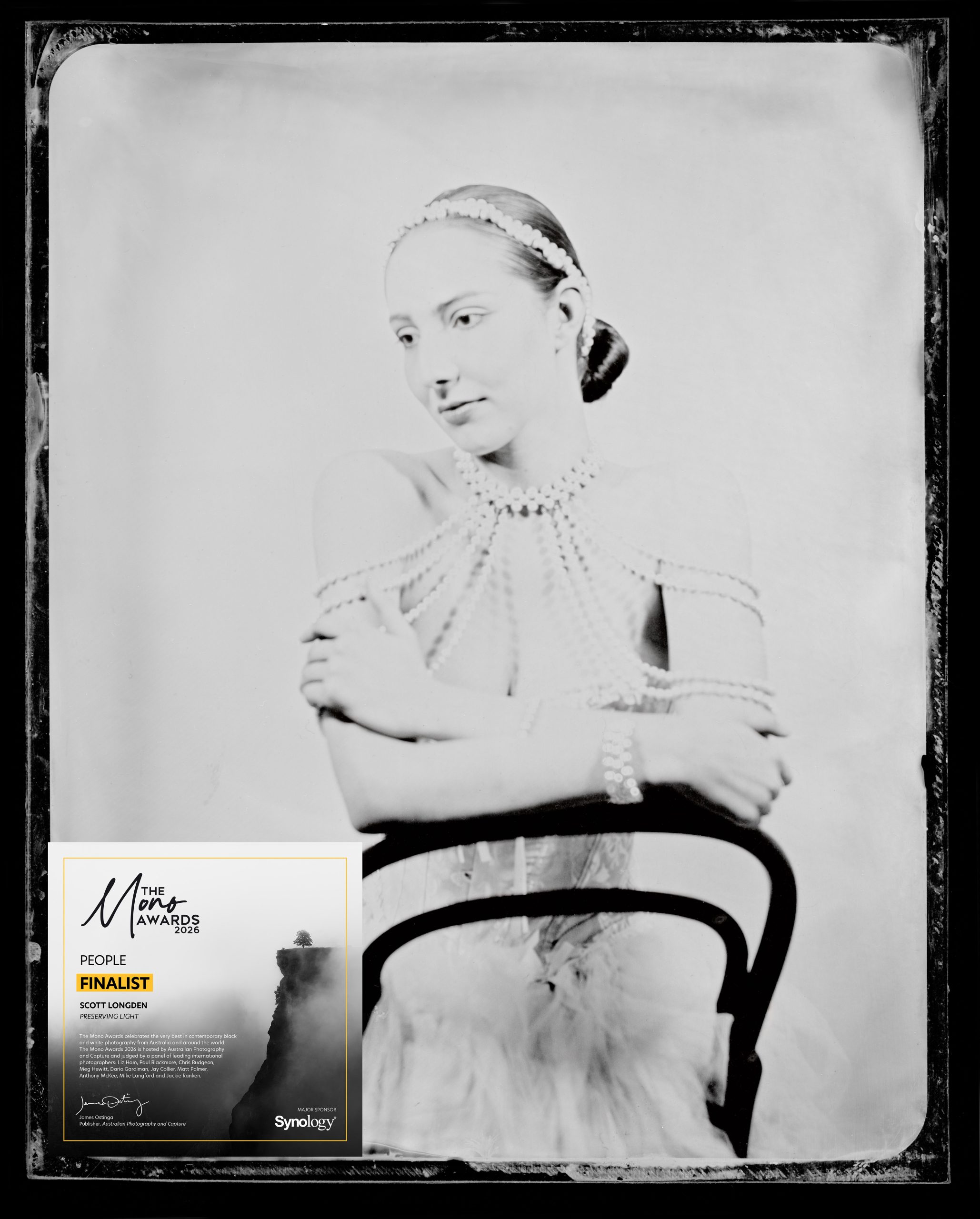
The plate is the photograph
A tintype is a direct positive made on a dark metal plate using the wet plate collodion process. There is no separate negative to print from. The image you see is on the plate that was in the camera.
A digital scan lets us share that image, but the original remains a physical plate. Its edges, surface and silver tones are part of the work, just as much as the expression or pose of the person in front of the lens.
Why it is called wetplate
The plate is coated with collodion, made sensitive to light, exposed in the camera and developed while the coating is still wet. The darkroom is part of making every photograph, rather than somewhere to visit at the end of a day’s shooting.
That rhythm changes the experience. The camera and sitter need to be ready, the materials organised, and each stage connected to the next. It is a hands-on process from the first pour.
A different way of seeing
Wetplate does not translate colour into tones in the same way as an ordinary digital photograph. Its sensitivity favours blue light, while reds can appear much darker. This gives portraits a distinctive look and makes light, clothing and skin tones interesting to explore.
You will also see the hand of the maker in the plates. Look through my portfolio and notice the edges and the variations from one image to another.
Try it for yourself
You do not need to understand all the chemistry before becoming curious about tintypes. My one-to-one wetplate workshops in Grantville introduce the process with guidance at each stage, and include a manual to support what you have learned.
Prefer to be in front of the camera? Explore tintype portrait sessions. For more background, visit the history of wetplate photography.
Explore the beginner series
1. What is a tintype? — you are here
2. From first pour to final plate
3. Your first wetplate workshop